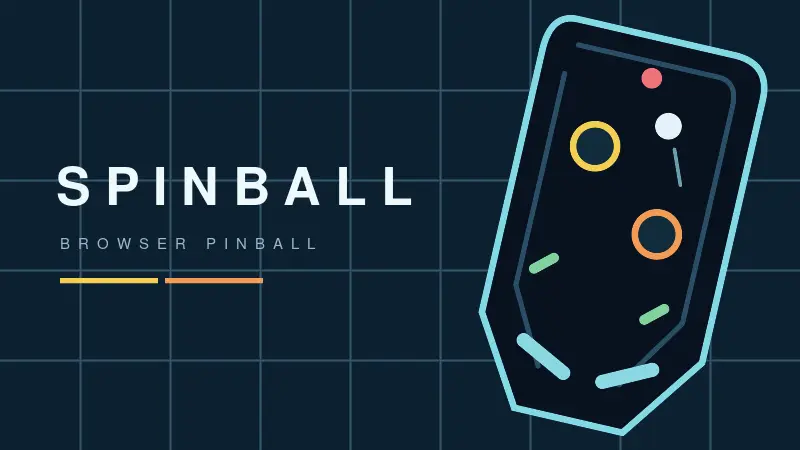
Play a compact pinball table built for Archipelago. Collect two coloured keys, receive a gate unlock and boosters from the multiworld, and aim for the red goal.
The APWorld exposes no functional gameplay settings; its only range field is an unused placeholder left from Yacht Dice. Its bundled setup documents also name Yacht Dice. The browser client is hosted separately and has no immutable version identifier.
Browse the gameplay families that can send checks to your multiworld.
2 The two fixed key sensors registered as Archipelago locations.Both key sensors are generated by the only published World configuration.
Yellow key
Default
Guide the ball through the yellow key sensor to send this check to Archipelago.
The pinball table
Orange key
Default
Guide the ball through the orange key sensor to send this check to Archipelago.
The pinball table
Playing with others
One browser table represents one Archipelago slot, exchanging two check rewards and progression items with other worlds. This is not a shared pinball table.
Known scope and limitations
Install spinball.apworld, generate an Archipelago room and open the maintainer’s browser game. The release links the correct site; packaged setup documents still describe Yacht Dice.
This review pairs APWorld 0.0.1 with a separately captured browser-client snapshot. The release tag does not contain the Spinball source directory, and the hosted client has no matching immutable version identifier.
Connection recovery is limited: after disconnecting the interface asks for a refresh. Checks and victory notifications have no persistent offline queue in the reviewed client.
Item delivery during initial table construction can occur before the gate or physics world is ready. An item may not be applied as intended; this follows from callback ordering rather than an observed play session.
Restoring previously checked keys is incomplete, particularly for the orange key. Repeated logins and unusual item-packet ordering also have unguarded state paths.
The client library can attempt unencrypted WebSocket transport after a secure connection fails; browser restrictions may block that attempt. It also writes browser/version diagnostics into the room’s data storage by default.
No upstream game or tests were executed. Dependency versions were identified and compared, but own-code licensing notices and release-to-source traceability remain incomplete.
 Panludia